The Power of Modest Generosity
Why Affordable Gifts Matter Just as Much as Major Donations
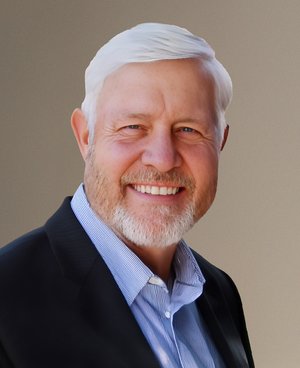
Image: By Ben Everidge with AI-generated editing
In philanthropy, we often measure impact by the size of a check.
Six figures. Seven figures. Endowments. Naming rights.
But sometimes, the most powerful act of generosity in a town does not come from a foundation. It comes from a family, a few friends, and a community that refuses to forget.
In the small town of Windermere, Florida, a red, white, and blue horse stands outside town hall.
Its name is Old Glory.
It is not massive. It is not gilded. It did not require a capital campaign.
But is carries tremendous weight.
The statue honors Lt. Evan Fitzgibbon, a young Army Ranger candidate who was tragically killed by a falling tree during training at the United States Army Ranger School in Georgia. His life ended in an accident that no one could have predicted.
His service, however, was intentional. And so was the memorial in his honor.
The Symbolism in the Horse
The choice of a horse was not decorative. It was deeply personal.
Evan’s favorite Bible verse was Proverbs 21:31: “The horse is made ready for the day of battle, but the victory belongs to the Lord.”
He had written it in his Ranger School journal. It reflected his understanding of duty, preparation, humility, and faith. The horse, in Scripture, symbolizes readiness. Strength. Discipline. Courage.
But the outcome – the victory – rests in God’s hands.
For Evan’s family, Old Glory was more than patriotic art. It became a living metaphor for his life.
Prepared for battle. Grounded in faith. Ready to serve.
The red, white, and blue design echoes his West Point-anchored patriotism. The biblical symbolism reflected his heart. The location in front of the town hall rooted his memory in the civic life of the community he loved.
When the town gathered for the dedication, this was not simply the unveiling of a statue. It was the public recognition of meaning.
And that meaning was funded not by a single wealthy donor, but by people who gave whatever support they could.
The Meaning Behind Modest Memorials
To an outsider, it is simply a painted horse statue.
To Evan’s family, it is a gathering place.
To his friends and Army colleagues, it is a reminder of duty.
To the town, it is a permanent acknowledgment that one of their own answered a call bigger than himself.
It did not require a nine-figure endowment.
It required love.
Modest memorial efforts often accomplish something large institutions cannot: they localize remembrance.
The root sacrifice in geography.
They turn grief into civic memory.
They create a place where future generations will ask, “Who was he?”
And someone will answer.
The Myth That Bigger Is Better
In major philanthropy circles, we talk about principal gifts, strategic leverage, and structural capital. Those tools matter.
But generosity is not hierarchical.
A $10 donation that comes from sacrifice is no less meaningful than a $10 million naming gift.
They serve different functions in the ecosystem of giving.
Large gifts:
Build hospitals and universities.
Fund research and endow academic chairs.
Create institutions
Small and community gifts:
Build culture.
Sustain memory.
Affirm cause and shared values.
Strengthen belonging.
One constructs architecture. The other constructs identity.
Both are necessary.
The Economics of Participation
Affordable donations and community memorials do something profound: They invite participation.
When a memorial is funded not by one donor but by many modest contributions, something else is built – ownership.
People who give $10 and $20 feel connected.
Children who contribute allowance money or lemonade stand proceeds feel invested.
Local businesses that donate supplies feel proud.
In this way, smaller memorial projects often generate more relational capital than financial capital.
And relational capital compounds. It builds trust. It builds civic glue.
It builds what economists might call social cohesion, but what towns like Windermere call community.
Old Glory stands not only because it was purchased and placed, but because it was supported by heart, mind, and soul.
Why We Must Celebrate These Efforts
In a media environment that highlights record-breaking gifts and billionaire philanthropy, small generosity rarely trends. But it should.
Because modest generosity:
Is accessible.
Is repeatable.
Is teachable.
Is scalable across millions of households.
If we only celebrate mega-gifts, we unintentionally teach that generosity requires vast wealth.
It does not. It requires intention.
Memorials as Moral Anchors
The horse in Windermere does not move. But it anchors something.
It reminds the town that service comes at a cost.
It reminds children that courage exists.
It reminds leaders that sacrifice is real.
And because of the Scripture tied to it – “The horse is made ready for the day of battle…” – it reminds all who pause there that preparation and humility can coexist. Strength and surrender can live in the same life.
Memorial philanthropy is not about grief alone. It is about values made visible.
And when those values are funded by ordinary people giving what they can, something extraordinary happens: Generosity becomes democratic.
The Generosity Spectrum
Philanthropy is often described as engineered, structured, and measurable.
That remains true.
But the generosity spectrum is wide:
Principal Gifts.
Program-Related Investments.
Public-Private-Philanthropic Partnerships.
Annual Funds.
Special Events.
Memorial Contributions.
Crowdfunded Projects.
Community Tributes.
Excellence exists at every level.
A preeminent system of generosity does not dismiss small or modest efforts. It dignifies them.
Because impact is not measured solely in dollars.
It is measured in meaning.
The red, white, and blue horse – Old Glory – outside Windermere’s town hall is not a billion-dollar structure. But it will outlast many headlines.
Long after financial reports fade, it will still stand.
Children will point.
Parents will explain.
Neighbors will pause.
And in that quiet space between memory and gratitude, generosity will have done its quiet work.
Not large. Not flashy.
But lasting.
Prepared for the day of battle.
And entrusted, ultimately, to something greater.