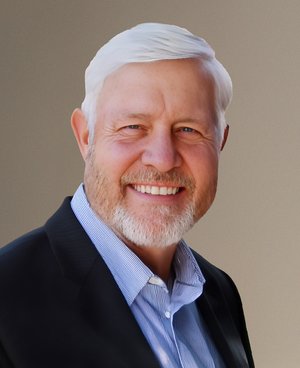
A Global Philanthropic Architect
Olivia Leland’s Impact on Lasting Systems Change
In the landscape of modern philanthropy, some leaders signal evolution; a rare few signal paradigm shift. Among them is Olivia Leland – a strategist, convener, and builder whose work is helping reshape how philanthropists think about scale, collaboration, and impact.
As the founder and chief executive of Co-Impact, Leland has spent the last decade pushing the field toward a deeper understanding of what it means to invest in systems that serve people, not just pilot programs, projects, or good intentions.
From Global Philanthropy to Systems Leadership
Leland’s trajectory offers a roadmap for evolving philanthropic practice. Before launching Co-Impact in 2017, she served as the founding director of The Giving Pledge, the global initiative begun by Bill Gates, Melinda French Gates, and Warren Buffett that invites the world’s wealthiest families to commit the majority of their wealth to address society’s greatest challenges. Under her guidance, The Giving Pledge developed strategic programming and community learning platforms and expanded its footprint to include hundreds of families worldwide.
Her earlier professional journey spans microfinance, financial inclusion work across Eastern Europe and Sub-Saharan Africa, multi-sector strategy development, and institutional effectiveness, experience that prepared her to confront one of philanthropy’s biggest questions: How can giving create change that lasts at scale?
Co-Impact: A New Philanthropic Model for Global Systems Change
Instead of asking “What can we fund?”, Leland and her team asked an even more consequential question: How can philanthropy support the leaders and systems that are already working to improve lives across regions?
The answer became Co-Impact, a global philanthropic collaborative explicitly designed to:
Bring funders and locally rooted changemakers together.
Support long-term, systems-oriented strategies.
Provide large, flexible, long-horizon funding that matches the scale of the problems being addressed.
Rather than funding isolated projects, Co-Impact helps fund systems change – the redesign of the structures that govern health, education, economic opportunity, gender equality, and inclusion, so that the systems serve people equitably and durably.
Why Co-Impact Matters to Preeminent Generosity
In the emerging era of preeminent philanthropy – giving that shares the long game, not the short list of tasks – Co-Impact’s model stands out for several reasons:
1. It Prioritizes Local Leadership
Co-Impact makes a foundational bet on community-rooted partners who understand the realities of their systems, from rural healthcare delivery in West Africa to foundational education strategies in East Africa and South Asia.
2. It Pools Capital for Scale
Rather than channeling one donor’s capital into program support, Co-Impact pools philanthropic resources from across geographies to support shared strategic goals, recognizing that scale rarely comes from single donors working in isolation.
3. It Centers Gender Equality
Advancing women’s leadership is not a niche subset for Co-Impact – it is central to every strategy and every fund structure. The organization’s Gender Fund alone has raised hundreds of millions toward ensuring that women’s leadership and gender equality are integrated into systemic improvement efforts.
4. It Treats Systems, Not Symptoms
The organization explicitly focuses on strengthening entire systems – health systems, education systems, economic opportunity systems – rather than isolated initiatives, believing that systems change produces durable and equitable impact.
These ideals at Co-Impact align deeply with the Generosity ethos: strategic, long-term investment in institutional capacity and civic infrastructure.
Impact at Scale
The numbers demonstrate the reach of Leland’s work and Co-Impact’s approach:
Co-Impact’s global team operates across five continents, backing strategies in Africa, Asia, and Latin America with more than $800 million mobilized for systemic impact.
The organization aims to deploy more than $1 billion in philanthropic capital by 2030 toward solutions that empower locally led initiatives and strengthen public systems.
The collaborative has united more than 60 funders and major partners, including leading global foundations, philanthropic families, and international supporters around shared impact priorities such as gender equality, education improvement, and economic inclusion.
These are not small grants. They are large, flexible, sustained investments meant to transform the context in which millions of people live.
Thought Leadership and Sector Influence
Leland’s influence extends beyond her organizational role. She regularly speaks and writes about the future of philanthropy, the importance of systems thinking, and the power of collaborative giving. Her work has been featured in top media outlets, and she is a recognized voice on the international philanthropic stage.
She also holds the distinction of being a Young Global Leader by the World Economic Forum – a recognition given to leaders whose work is shaping global progress.
The Generosity Perspective: What Makes Leland’s Leadership Unique
Olivia Leland is more than a grant maker. She is a philanthropic architect, someone who understands that today’s grand challenges require capital that:
Is large enough to meet the scale of complex issues.
Is flexible enough to adapt to evolving realities.
Is connected enough to support local ownership.
Is sustained enough to endure through systemic transformation.
In other words, Leland is practicing philanthropy in a manner aligned with Generosity’s definition of preeminent giving: strategic, collaborative, humbly led, and institutionally transformative.
Her work offers a living case study for donors who want to move beyond transactional giving and toward impact at scale that lasts.
If philanthropy’s highest calling is to strengthen the systems that make human lives possible – our schools, our health systems, our economic pathways, and our communities – then leaders like Olivia Leland show us not just what that looks like, but how to get there.